A Guide to Home Insulation Materials

Insulation is one of those building products that you never see, because it is usually covered up by something else. But if you don't have enough, or if it is installed incorrectly, you're wasting energy and paying more for heating and cooling than is necessary.
There are a number of insulation products you can use to prevent energy loss. However, it is important to realize that insulation is only one part of a two-prong approach to energy efficiency. The other arm of the plan involves sealing all of the holes, cracks or openings caused by pipes, wires, chimneys or anything that creates an opening in a wall, ceiling, or most importantly, attic floor.
These openings allow interior air to escape to the unconditioned (not heated or cooled) space that surrounds your home. The sealing process is called "air sealing," and requires silicone caulk and expanding foam that comes in a can. It isn't exciting work, and while easy, it requires attention to detail. It is extremely important because the openings are escape routes for heated and cooled air and because many insulation products do not stop moving air. If you plan on insulating, be sure to attend to air sealing as well.
Where to Insulate
Basically, insulation should be placed in any area that separates your heated and cooled living spaces from areas that are not heated and cooled. These areas include:
- Attics
- Cathedral ceilings
- Sidewalls
- Walls between the living area and an attached garage
- Floors over unheated basements
- Floors over crawl spaces
- Foundation walls
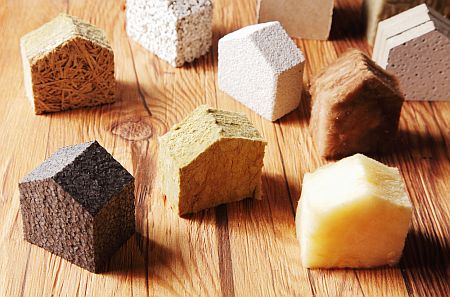
Insulation Materials
The effectiveness of insulation is measured by its R-value - "R" stands for resistance to heat flow. The higher the R-value, the better. It is important to match the insulation to the application as well. For example, fiberglass insulation has an R-value of about 2.8 to four per inch. Some foam panels have R-values of seven or eight. But you can easily find fiberglass batts or blankets that are 12 inches thick and designed for use as attic insulation, providing over an R-40. Standard foam panels only come in one-half to two inch thicknesses.
Some products are easier to install than others. Fiberglass batts simply roll into place. They are manufactured to fit snugly between ceiling joists and wall studs. When installing any insulation, it is important that the product be placed flat against the surface you are insulating. Any air space under the insulation or gaps around the edges will limit the effectiveness of the product.
Here's a look at some common insulation products:
| Fiberglass Mineral Wool (Available in batts, blankets and as a loose fill material) |
2.8 to 4 |
|
|
| Cellulose | 3 to 3.7 |
|
|
| Foam Boards |
|
|
|
| Spray-On Polyurethane |
|
|
|
Use this chart as a reference point when insulating your home. Proper insulation will help lower your energy bills and keep your home at a comfortable temperature.
Want to estimate your home improvement costs before talking with a contractor? Claim your home for free with bluehammer to estimate costs, secure your home inventory and learn more about your home.
* THIS REPORT IS AN OPINION THAT MAY BE INACCURATE AND IS PROVIDED SOLELY AS AN INFORMATIONAL TOOL NOT DESIGNED TO PROVIDE DEFINITIVE ANSWERS. ALL ELEMENTS ARE OFFERED "AS IS" AND BLUEBOOK EXPRESSLY DISCLAIM ANY AND ALL WARRANTIES, REPRESENTATIONS, AND GUARANTEES OF ANY NATURE, EXPRESS, IMPLIED OR OTHERWISE, INCLUDING BUT NOT LIMITED TO ANY IMPLIED WARRANTIES OF MERCHANTABLITILY, NONINFRINGEMENT, TITLE, QUIET ENJOYMENT, ACCURACY, OR FITNESS FOR A PARTICULAR PURPOSE. IN NO EVENT SHALL BLUEBOOK (OR THEIR SUPPLIERS) BE LIABLE FOR ANY GENERAL, DIRECT, SPECIAL, INCIDENTAL, INDIRECT OR CONSEQUENTIAL DAMAGES OF ANY KIND, OR ANY DAMAGES WHATSOEVER (INCLUDING WITHOUT LIMITATION, THOSE RESULTING FROM USE OF THE PRODUCT, INCLUDING : (1) RELIANCE ON THE MATERIALS PRESENTED, (2) COSTS OF REPLACEMENT GOODS, (3) LOSS OF USE, DATA OR PROFITS, (4) DELAYS OR BUSINESS INTERRUPTIONS, (5) AND ANY THEORY OF LIABILITY, ARISING OUT OF OR IN CONNECTION WITH THE USE OR PERFORMANCE OF INFORMATION) WHETHER OR NOT BLUEBOOK HAS BEEN ADVISED OF THE POSSIBILITY OF SUCH DAMAGES.